I’m Alan.
Mission 001 // Arrival
I help teams shape new worlds.
Twenty years across the open internet, mobile, social, blockchain and now AI, as an engineer and a CTO. I join founders and teams while the ground is still empty, and build the systems that turn an idea into a product people actually use.
There are always more worlds worth building.
Discover.Develop.Deploy.
// Discovery
Discover the terrain.
Before we build, we learn the world.
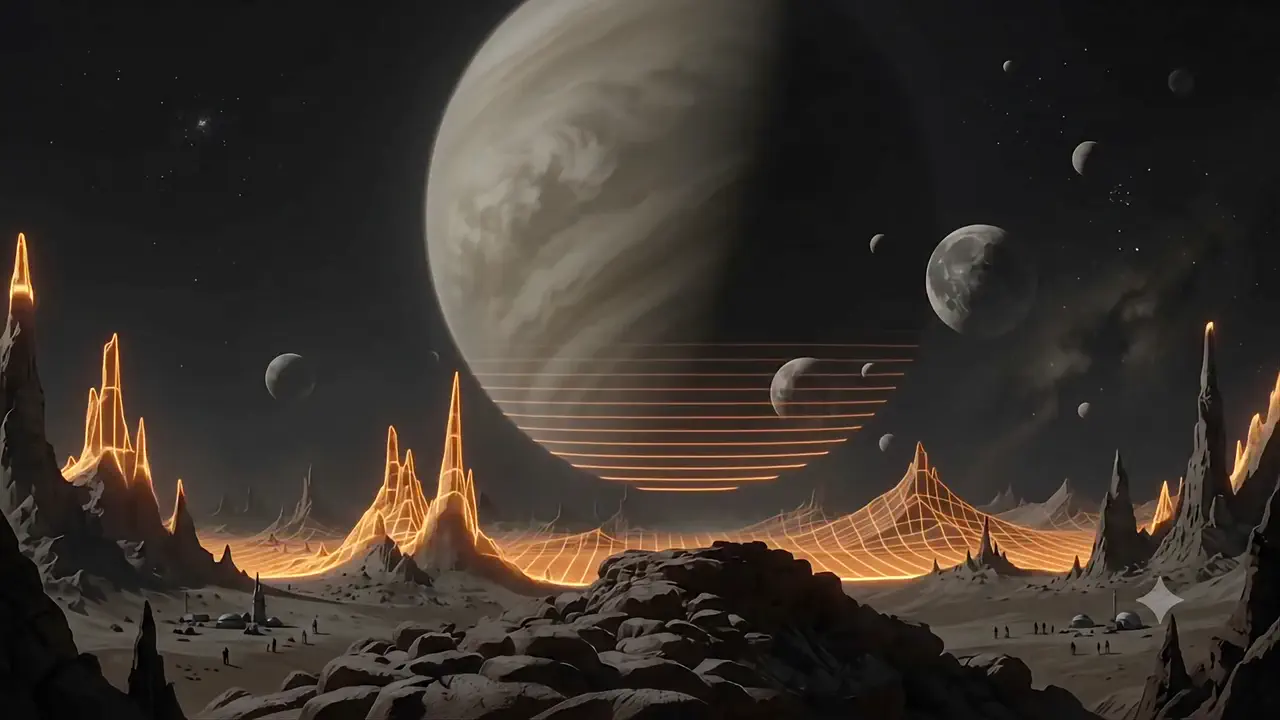
Discovery turns uncertainty into a plan. We scan the terrain around the business, understand the market orbit, map the conditions ahead, choose the right technical route, and define a clear mission plan for development.
Hover any reading for detail
Decision areas
Discovery output
Discovery ends with a clear plan for development.
// Discovery
Discover the terrain.
Before we build, we learn the world.
Discovery turns uncertainty into a plan. We scan the terrain around the business, understand the market orbit, map the conditions ahead, choose the right technical route, and define a clear mission plan for development.
Tap any reading for detail
Decision areas
Discovery output
Discovery ends with a clear plan for development.
Prototype anywhere. Run it at the edge.
A managed platform puts a prototype in front of people the same day — the good ones are interchangeable. Production is a distributed system with compute at the edge, close to the users. Wherever it lands it's defined as code, CDK here: versioned in git, reviewed as a diff, rebuildable from scratch. Containers in production since 2008.
Stacks — cdk synth
Cross-cutting
Deploy log
eu-central-1 · 6 stacks
- EdgeStack/DistributionCloudFront::Distribution
- NetworkStack/VpcEC2::VPC
- NetworkStack/PrivateSubnetEC2::Subnet
- IngressStack/AlbElasticLoadBalancingV2::LoadBalancer
- ComputeStack/ApiServiceECS::Service
- ComputeStack/WorkerFnLambda::Function
- DataStack/AuroraClusterRDS::DBCluster
- DataStack/EventsTableDynamoDB::Table
- BusStack/EventBusEvents::EventBus
- ObsStack/LatencyAlarmCloudWatch::Alarm
0/10 resources · CREATE_COMPLETE
Delivery loop
// Development
Build the machine.
Drawn, built, and put to work.
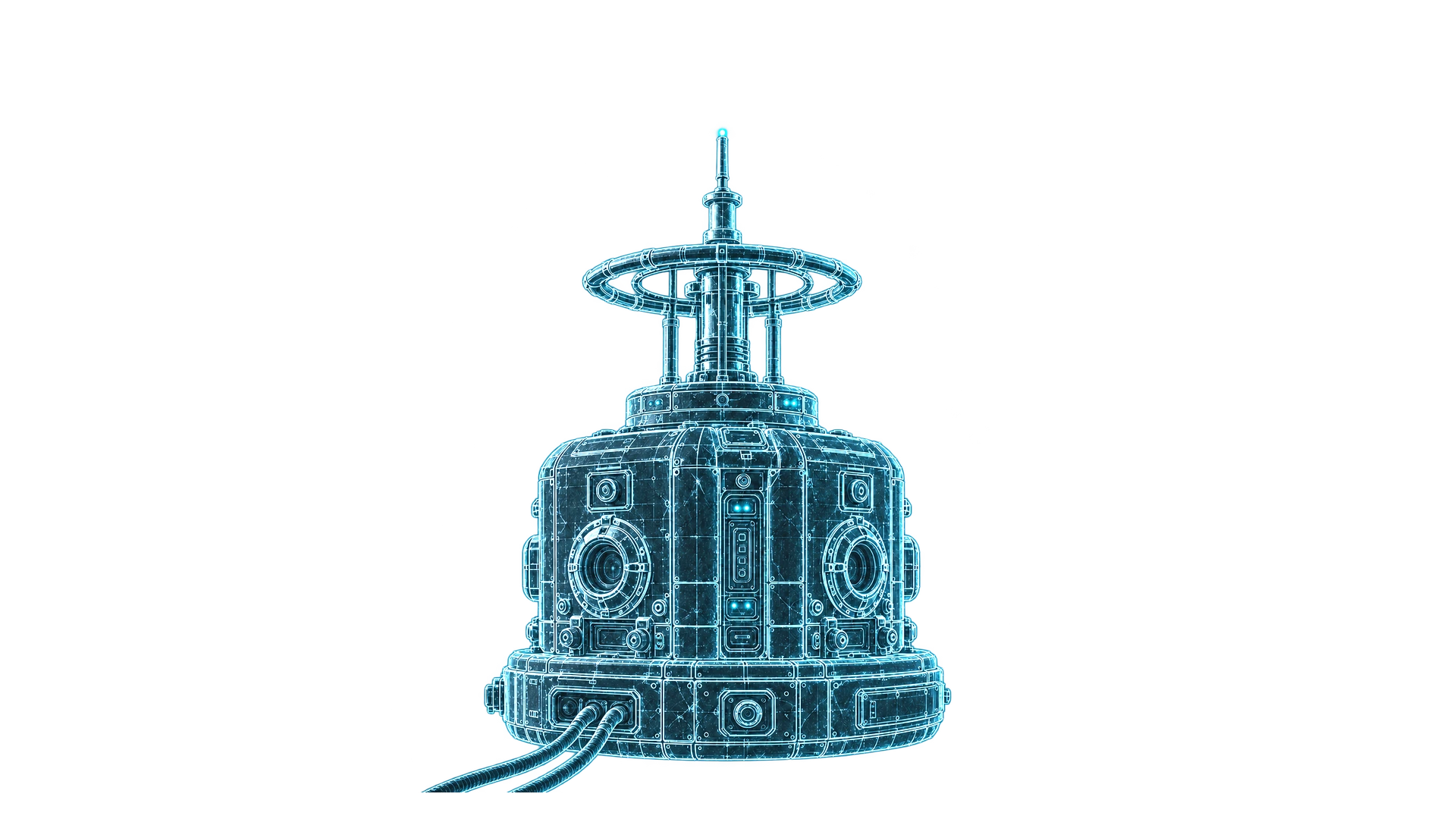
Development is where the plan becomes hardware. Each node starts as a blueprint, materialises into something that runs in production, then goes out and holds up a world.
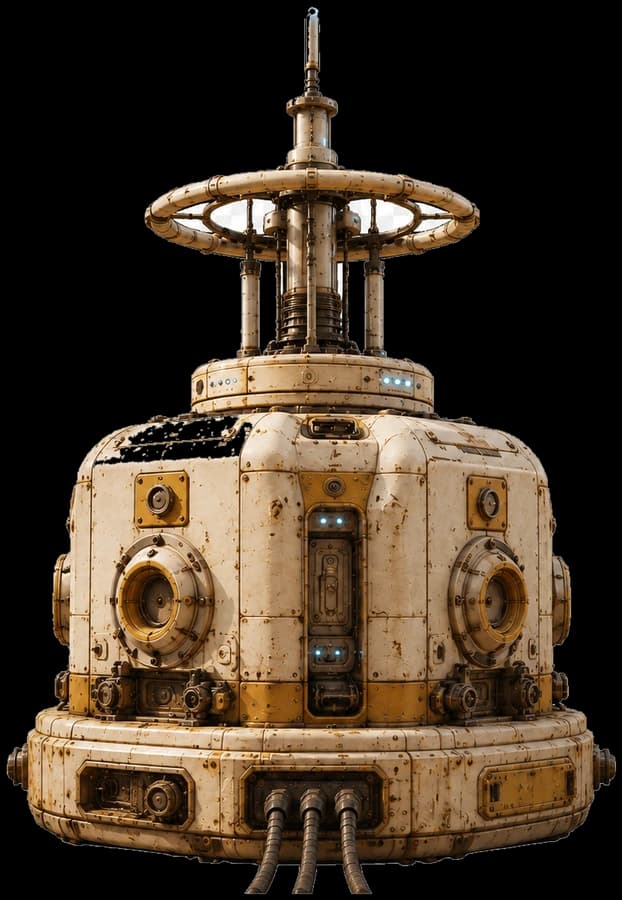
- Reactor capEdge network and CDN
- Ring structureLoad balancing and autoscaling
- Core assemblyContainers and serverless compute
- Power coilsVPC, subnets, security groups
- Base housingInfrastructure as code
A managed platform puts a prototype in front of people the same day — the good ones are interchangeable. Production is a distributed system with compute at the edge, close to the users. Wherever it lands it's defined as code, CDK here: versioned in git, reviewed as a diff, rebuildable from scratch. Containers in production since 2008.
Stacks — cdk synth
Cross-cutting
Delivery loop
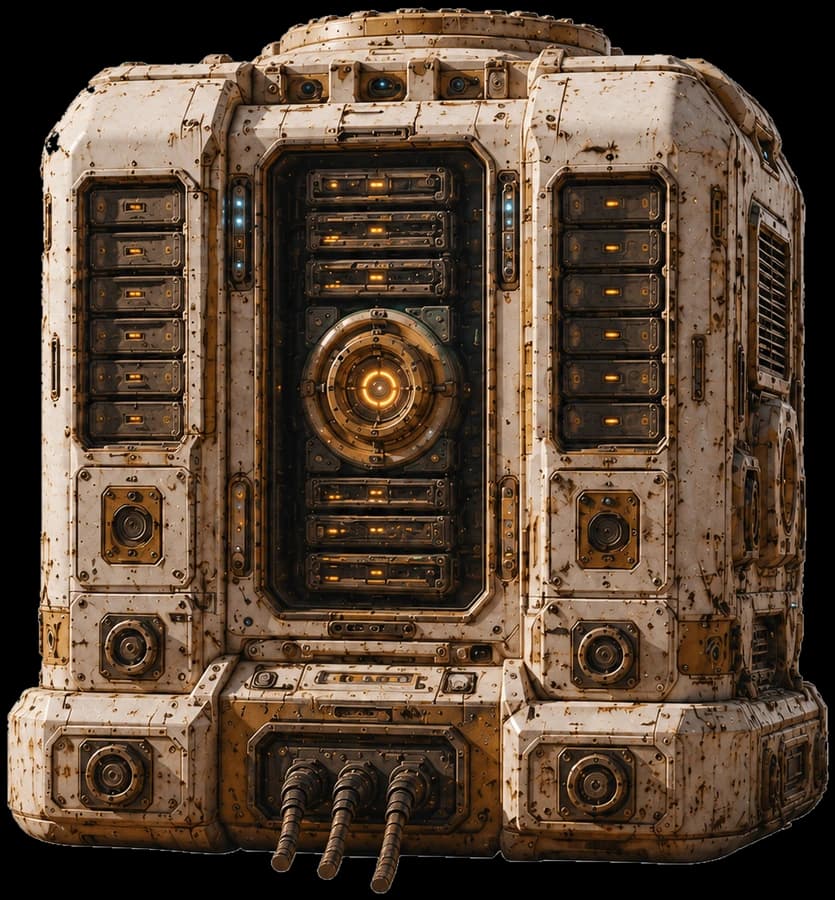
- Dome capThe public API surface
- Sensor barAuth, rate limits, observability
- Compute stackTyped services and handlers
- Storage arraySchema, queries, migrations
- Base plateQueues, jobs, and webhooks
A backend earns trust by being predictable. Requests validated at the edge and rejected with a code, not a stack trace. Sessions that can be reasoned about. Schema changes that arrive as a reviewable diff. Long work moved off the request and made to survive a retry. The interesting parts of a product should be in the product, not in wondering whether the API meant it.
Service — route table
Cross-cutting
Service loop
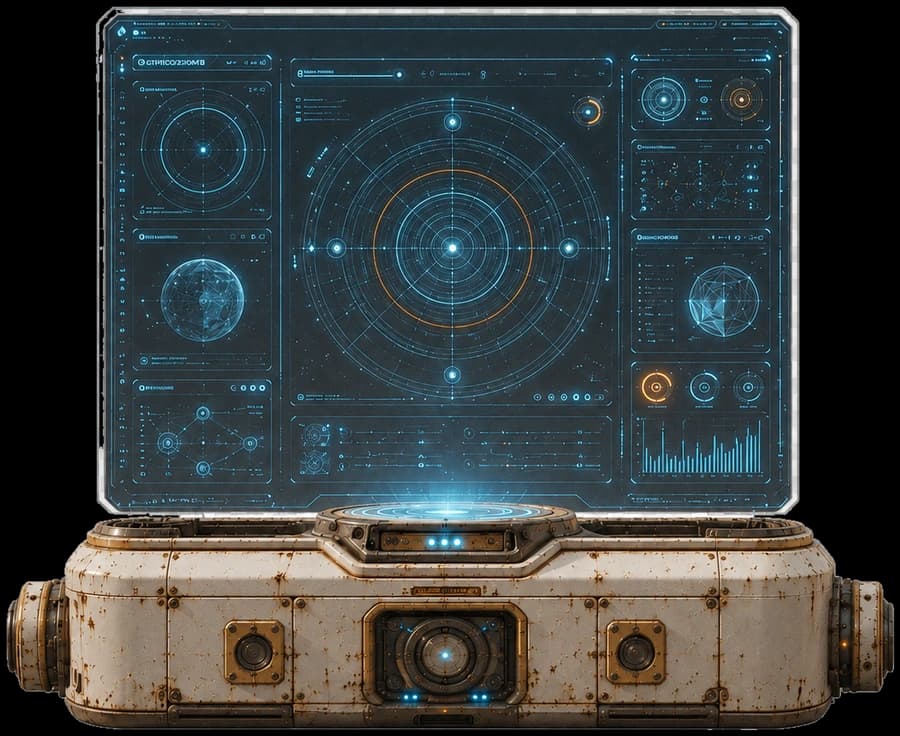
- Display panelScreens, states, and motion
- Control layerDesign system and tokens
- Emitter collarRouting and data fetching
- Interface boardAccessibility and performance
- Base frameComponent architecture
Everything else in this section is invisible if the front of it doesn't hold up. Server-rendered by default with interactivity pushed to the leaves, motion choreographed against scroll rather than sprinkled on, and every colour and typeface coming from one set of tokens. It should feel expensive and weigh almost nothing — and it should still work with motion turned off.
Interface — client islands
Cross-cutting
Build loop
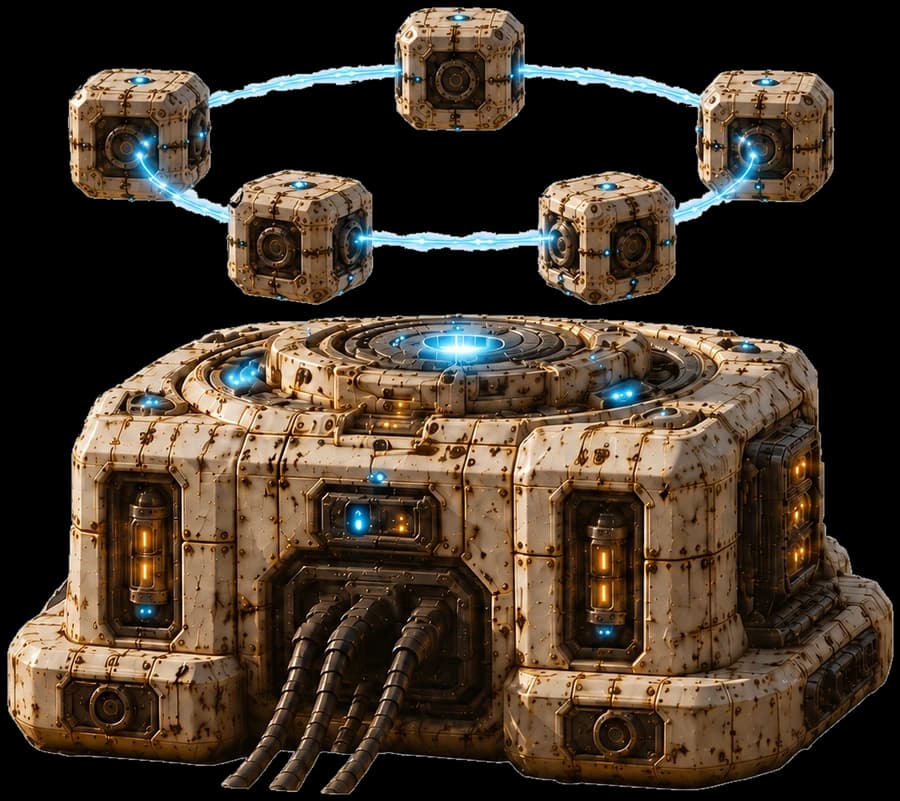
- Trust nodesWallets and signing
- Link meshTransactions and gas
- Consensus coreSmart contract integration
- Validator unitIndexing and on-chain reads
- Base unitOff-chain services and custody
A ledger is worth its cost for exactly one thing: agreement nobody can quietly edit later. Escrow, settlement, proof that a party accepted. Everything else — descriptions, profiles, invitations — is an ordinary database row. The engineering is in the seam: signatures scoped tightly, writes simulated before they're sent, and the chain treated as the truth that the database follows.
Ledger — contract calls
Cross-cutting
Settlement loop
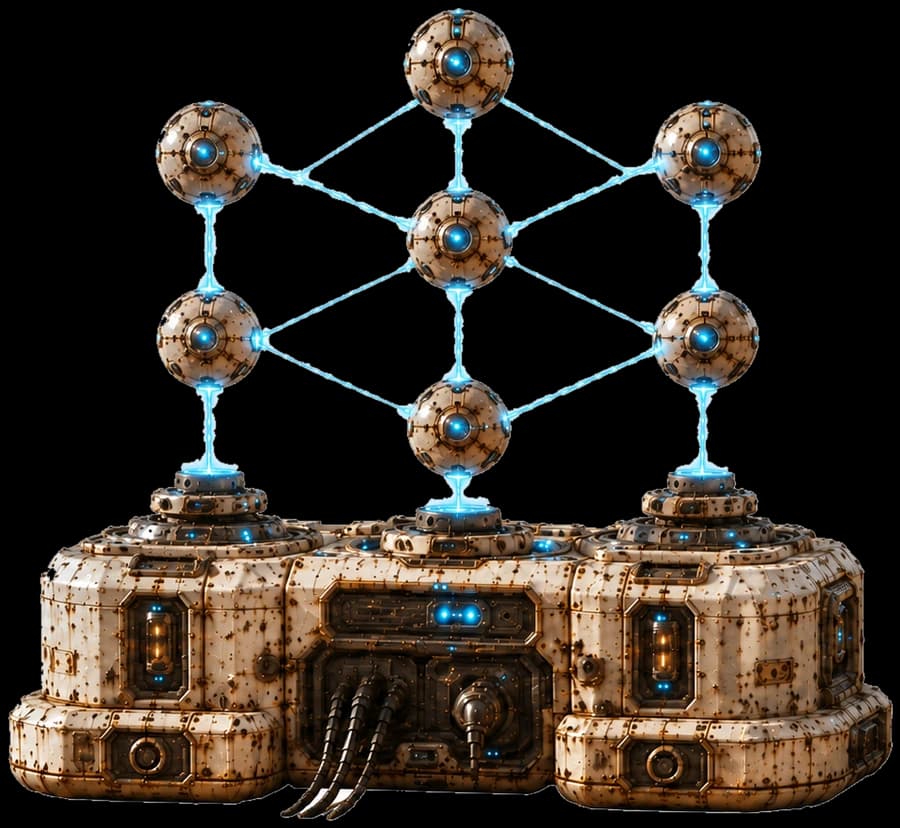
- Node clustersAgents and tool use
- Link layerMulti-model orchestration
- Compute modulesContext and retrieval
- Data matrixCheckpointed run state
- Base housingBudgets, guardrails, tracing
A frontier model is one call away from anyone, so the model is never the moat. The work is the harness: what context it's allowed to see, which tools it can reach, and what happens when a twenty-minute run dies halfway through. Graph workflows that checkpoint and resume, panels of agents that grade each other before anything is synthesised, and a deterministic layer underneath so the model explains results instead of deriving them.
Harness — graph compile
Cross-cutting
Build loop
Cloud, containers, infrastructure as code — somewhere for a world to stand.
Typed serverless APIs, data models, integrations — what holds it together.
React interfaces, design systems, motion — the face a world shows.
Contracts, wallets, on-chain state — one record two strangers can both verify.
Agents, multi-model workflows, AI products — ground that thinks.
Surface reached. Deploying the kit that gives an empty world ground, a spine, a face, and a mind.
Cloud, containers, infrastructure as code — somewhere for a world to stand.
Typed serverless APIs, data models, integrations — what holds it together.
React interfaces, design systems, motion — the face a world shows.
Contracts, wallets, on-chain state — one record two strangers can both verify.
Agents, multi-model workflows, AI products — ground that thinks.
Surface reached. Deploying the kit that gives an empty world ground, a spine, a face, and a mind.
2025–present · Forever Labs · CTO
~800K
markers
~1,000
people genotyped
PMRA
microarrays
What the reports surface
One plot reads. Now the whole world.
// SYSTEM // Bioinformatics
2025–present · Forever Labs · CTO
The planet here is a human genome.
We chart the world and we do not keep the map.
S-01
The terrain
The planet here is a human genome.
A genotype arrives complete and unreadable — technically dense, practically uninhabitable. Every fact about a person is in there and none of it is legible.
- ~800K · markers
- ~1,000 · people genotyped
- PMRA · microarrays
S-02
The survey
Getting across the terrain at scale.
Pipelines that ingest and process DNA sequencing data — the DNA-sequencing business line designed and built end to end.
S-03
The map
Markers that finally mean something.
The interpretation layer — public variant libraries and clinically significant tests cross-referenced and surfaced through a purpose-built frontend.
S-04
The protocol
We chart the world and we do not keep the map.
Zero-retention and open-source as the standing rule — plus the standards the survey holds itself to: ACMG classification, CLIA confirmation pathways, and GA4GH DUO consent.
S-05
First growth
One plot of the desert becomes something a person can read.
AI reporting workflows that explain each data point, assemble custom reports, and decide what to surface by clinical significance — every insight tagged with a confidence level.
What the reports surface
// All nodes online — terraforming
Deployment complete
The world comes alive.
Ground, spine, face, and mind are all standing. What was bare surface an hour ago now runs on its own — and the desert starts to breathe.